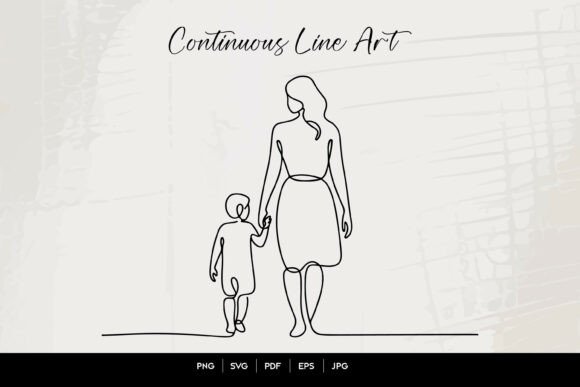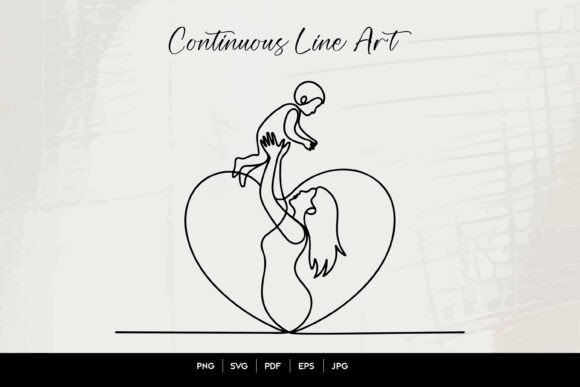
Mother and Baby Line Art
A Quiet Moment, Cleanly Captured — First Impressions That Matter
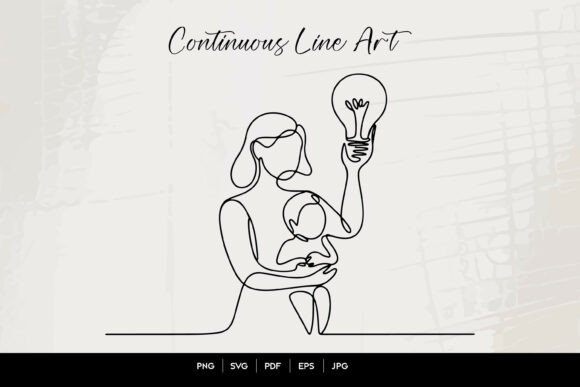
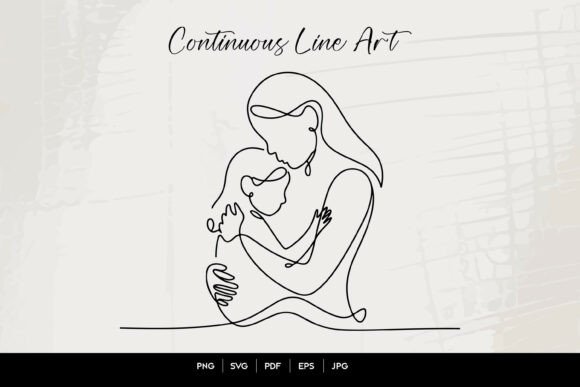
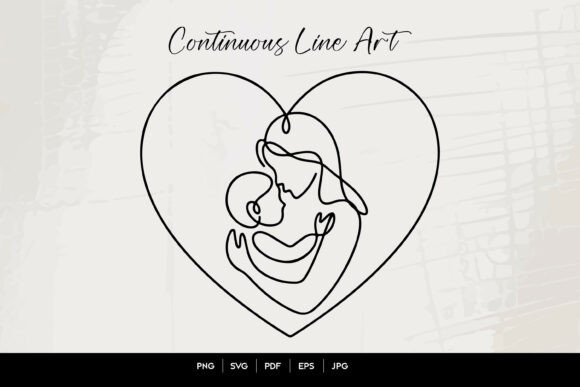
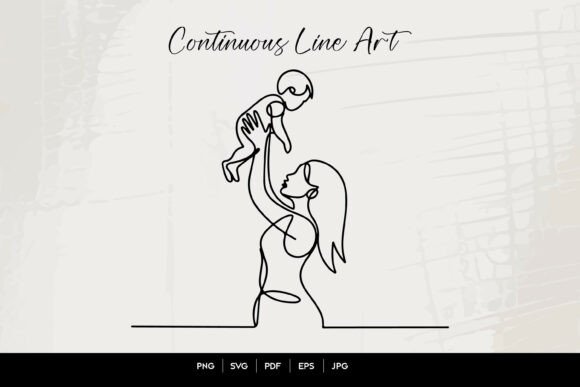
When I opened the Mother and Baby Line Art files, what struck me first wasn’t technical precision—it was quiet intention. This isn’t a busy, decorative motif or a stylized illustration. It’s a single, unbroken line tracing the curve of a mother’s shoulder, the gentle arc of her arm cradling a child, the soft contour of two heads resting close. There’s no shading, no fill, no ornament—just continuity. That simplicity is its strength *and* its responsibility. In embroidery, especially for handmade products like nursery pillows, baby onesies, or boutique aprons, this kind of minimalism reads as thoughtful—not sparse. It feels personal, not generic.
Where It Lives Best: Real Projects, Not Just Pixels
I tested Mother and Baby Line Art on three real items: a linen tea towel, a cotton twill tote bag, and a lightweight organic cotton baby blanket. On the towel, stitched in soft ecru thread with a running stitch, it looked warm and grounded—perfect for a small shop’s “Motherhood Collection.” On the tote, scaled to 4.5 inches wide, it held clarity even at medium distance. But on the baby blanket? That’s where it shined: subtle, tender, and unmistakably handmade. Customers don’t just buy a design—they buy the feeling behind it. This one delivers maternal love without sentimentality, making it ideal for personalized gifts, holiday embroidery (think Mother’s Day cards with embroidered tags), or even wedding keepsakes for new parents.
What Holds Up — And What Needs Careful Handling
Mother and Baby Line Art works beautifully for machine embroidery design when treated as a *line-based* asset—not a dense fill. It translates cleanly into running stitch or satin stitch outlines, but avoid converting it to heavy fill stitch unless you’re intentionally adding texture (e.g., a delicate heart outline stitched in variegated thread). For custom apparel like sweatshirts or t-shirts, keep the scale between 3–5 inches: too small, and the connection between figures blurs; too large, and the line loses its delicate rhythm.
Use caution on:
- Stretchy fabric — The continuous line relies on consistent tension. Test with light cutaway stabilizer before stitching on knits.
- Curved surfaces — Caps or curved pillow covers can distort thin line art. A slight simplification of the neck or arm curve may help maintain flow.
- Dark or textured fabrics — Since it’s line art, contrast matters. A pale thread on charcoal linen reads softly; on black terry cloth, it risks disappearing. Always test thread colors on scrap first.
- Tiny hoop sizes — Below 3 inches, fine details (like the space between heads or the taper of the line at the wrist) may compress or stitch inconsistently. Confirm your smallest reliable hoop size before scaling down.
Why It Builds Trust — Not Just Aesthetics
As an Etsy seller and craft business owner, I’ve learned that customers notice authenticity in the *silence* between stitches. Mother and Baby Line Art doesn’t shout—it invites. That makes it powerful for branding: imagine it stitched discreetly on the hem of a nursing top, embroidered on the corner of a kitchen towel sold in a local boutique, or printed as a digital embroidery file preview alongside a printable mockup. It signals care, not clutter. Buyers associate that restraint with quality craftsmanship—and that perception lifts perceived value, especially for personalized gifts and small shop products.
Practical Designer Notes Before You Stitch
This isn’t just about opening an SVG and hitting “embroider.” Here’s what I do before committing Mother and Baby Line Art to a finished product:
- Test on scrap fabric — Same fiber, same weight, same stabilizer as your final piece.
- Check stitch density — Even simple line art can bunch if digitized poorly. Look for smooth transitions, no overlapping jumps, and clean starts/stops.
- Review small details — Zoom in on corners and curves. Does the line lift cleanly? Does it taper naturally—or end abruptly?
- Mock it in black and white — Print a B&W version on paper and hold it against light/dark fabric swatches. If you can’t trace the shape confidently, it won’t read well in thread.
- Confirm licensing — Since this is a Graphics asset sold for Crafts use, verify whether commercial embroidery (e.g., selling embroidered tote bags on Etsy) is permitted under the license. When in doubt, contact the creator.
- Pair thoughtfully — This design doesn’t need embellishment. Skip extra flourishes. Let the line breathe—on fabric, in packaging, in your shop photos.
Final Thought: Less Is Anchored, Not Empty
Mother and Baby Line Art isn’t a shortcut—it’s a focus. It asks you to slow down, choose intention over decoration, and trust that a single line can carry weight. For embroidery designers building a portfolio of meaningful work, for small shop owners curating emotionally resonant merchandise, and for makers who want their handmade product to feel quietly significant—this is more than a digital embroidery file. It’s a quiet partner in storytelling. Use it where stillness speaks louder than color, where simplicity honors complexity, and where every stitch feels like a choice—not just a command.