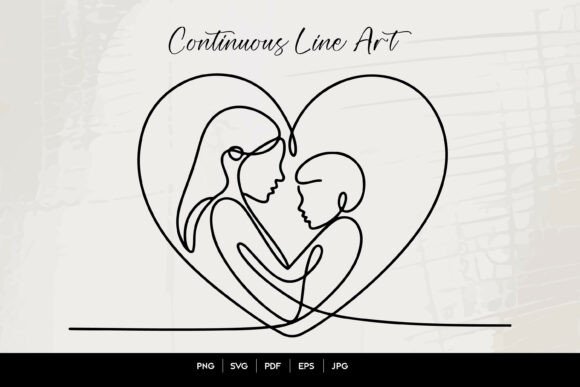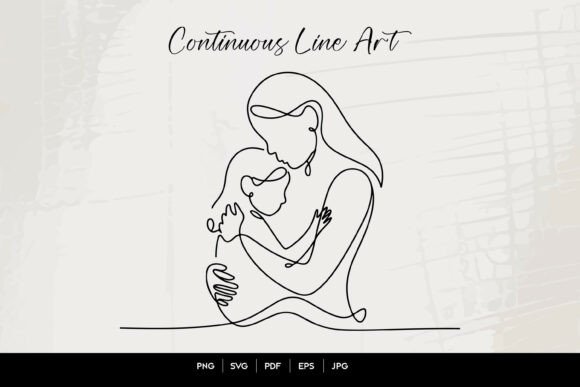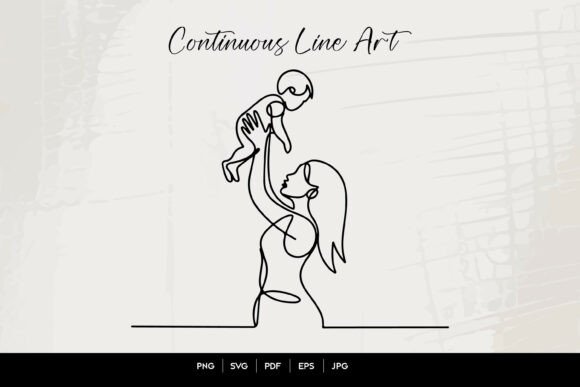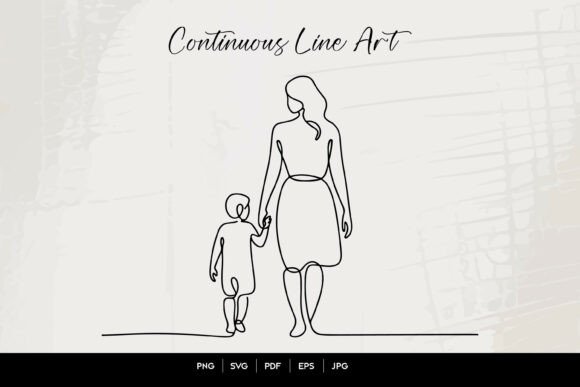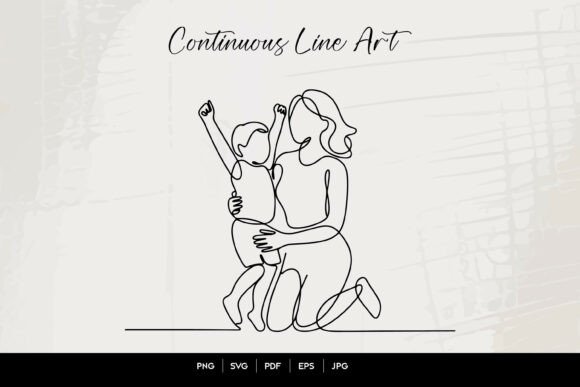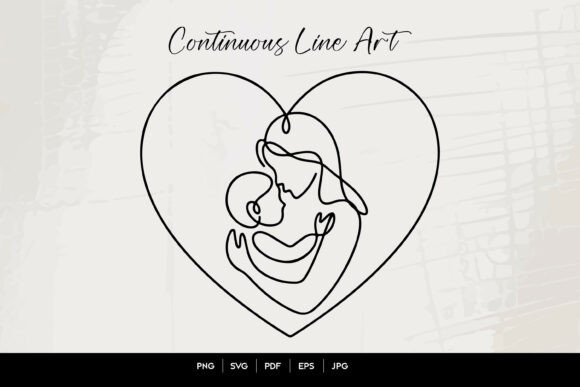
Mother and Child Heart Line Art
A Quiet Moment, Cleanly Captured
First glance at Mother and Child Heart Line Art isn’t about boldness—it’s about breath. The design leans into minimalism with intention: two figures—mother and child—interwoven by a single, unbroken heart-shaped line. No shading, no heavy outlines, no decorative flourishes. Just confident, smooth curves and gentle negative space. It feels tender without being saccharine, modern without losing warmth. As an embroidery designer who’s stitched hundreds of motherhood-themed pieces, I immediately pictured this on a soft organic cotton baby blanket—not as a statement, but as a quiet affirmation.
Where This Design Truly Shines
I recently prepped it for a custom embroidered tote bag for a local maternity boutique. The client wanted something subtle yet meaningful—no cutesy fonts or cartoonish silhouettes. Mother and Child Heart Line Art landed perfectly: clean enough for branding, emotional enough for gifting, and scalable without losing its delicate balance. It worked equally well as a 3.5” chest embroidery on a relaxed-fit sweatshirt and as a 2” applique on a linen apron pocket. Because it’s built from continuous lines rather than dense fills, it translates beautifully to satin stitch borders, running stitch outlines, or even low-density fill-stitch versions for lightweight fabrics.
For Etsy sellers and small shop owners, this is the kind of design that elevates handmade product photography. On a cream tea towel? Elegant. On a navy baby onesie? Thoughtful. As a standalone embroidered patch? Instant heirloom energy. It avoids visual clutter—so it doesn’t compete with fabric texture, garment seams, or other design elements. That makes it ideal for holiday embroidery (think personalized Christmas stockings or Easter pillow covers), wedding gifts (for new moms or godmothers), and nursery decor where calm aesthetics matter.
Real-World Embroidery Considerations
That said—line art doesn’t automatically mean “easy stitch.” I tested Mother and Child Heart Line Art on three surfaces: a stretchy jersey knit, a nubby linen blend, and a tightly woven cotton poplin. On the jersey, the thin connecting lines between figures softened slightly without proper cutaway stabilizer. On the linen, the open negative space read clearly, but tiny interior curves needed a slight stitch density adjustment to avoid thread nesting. On poplin? Perfect—crisp, confident, and ready for production.
This design asks for thoughtful execution—not because it’s difficult, but because its strength lies in precision. Use it on dark fabric? Confirm your thread color creates enough contrast—especially where the child’s head meets the mother’s shoulder. On curved surfaces like caps? Avoid placing the tightest curve (where the heart narrows near the figures’ hands) directly over the crown seam. On textured towels or blankets? Consider adding a light underlay stitch to anchor those fine lines.
What It Adds to Your Finished Product
Customers don’t just buy embroidery—they buy feeling. Mother and Child Heart Line Art communicates care, continuity, and quiet devotion. When stitched cleanly, it signals craftsmanship: no jagged corners, no skipped stitches, no overcrowded zones. That builds trust—especially for personalized gifts where sentiment carries the price. For craft businesses, it supports brand consistency: minimalist, heartfelt, and human-centered. For digital product sellers, it’s versatile in printable mockups—works in grayscale, scales smoothly across formats, and reads well even in thumbnail previews.
It also quietly raises perceived value. A plain tote bag becomes a keepsake. A basic sweatshirt gains emotional resonance. And because it avoids dated trends (no floral wreaths, no script fonts, no seasonal clichés), it stays relevant year after year—ideal for evergreen listings on Etsy or inventory for craft fairs.
Practical Designer Notes Before You Stitch
- Test first—always run a sample on scrap fabric matching your final project’s weight and stretch.
- Check thread color contrast on both light and dark backgrounds before digitizing or stitching.
- Review stitch density, especially around the narrowest parts of the heart line—too dense and it’ll pucker; too sparse and it’ll look fragile.
- Confirm hoop size—the design’s proportions work best in mid-range hoops (4”–6”), but verify scaling if you’re planning very small (under 2”) or oversized (over 8”) applications.
- Inspect small details in your embroidery software—look for unintended overlaps, gaps, or abrupt angle shifts in the vector paths.
- Try black-and-white mockups to assess clarity without color distraction.
- Use appropriate stabilizer: tear-away for stable wovens, cutaway for knits or loosely woven fabrics.
- Verify licensing before selling finished items or bundling the files—this is a Graphics asset, not automatically commercial-use unless stated.
A Design That Respects the Craft—and the Customer
In my decade of reviewing embroidery assets for craft businesses, few designs strike the balance this one does: simple enough for beginners to execute well, refined enough for professionals to feel proud stitching, and emotionally resonant enough that customers pause, smile, and say, “Yes—that’s exactly how it feels.” Mother and Child Heart Line Art doesn’t shout. It holds space. And in today’s crowded handmade market, that kind of quiet confidence is rare—and valuable.
Whether you’re stitching for a client, building a boutique collection, or creating digital embroidery files for sale, treat this as more than a graphic—it’s a tool for connection. Use it with care, test it with honesty, and let its simplicity do the speaking.