Mother Child Heart Line Art
A Quiet Moment, Cleanly Captured
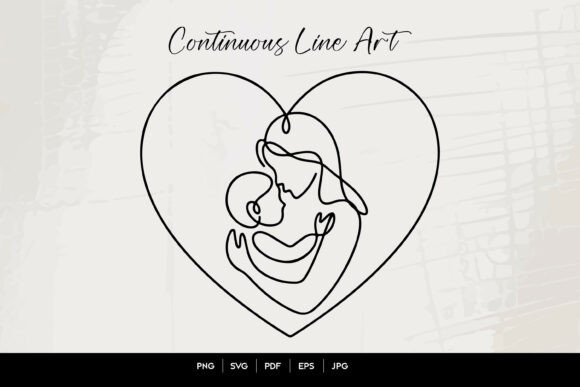
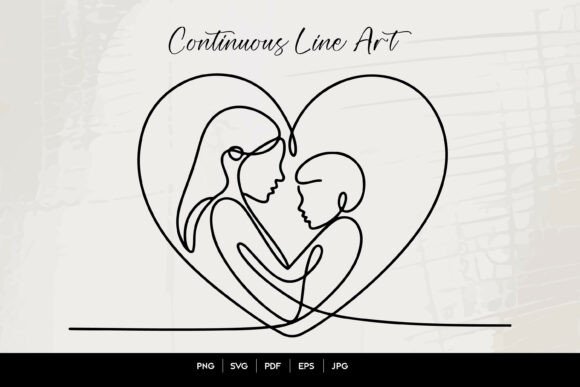
First glance at Mother Child Heart Line Art isn’t about flash—it’s about resonance. The design breathes tenderness: two simplified, connected figures forming a soft heart shape, rendered in clean, unbroken lines. No shading, no heavy outlines—just confident, intentional strokes that suggest embrace, protection, and quiet devotion. It doesn’t shout “mom” or “family”—it invites recognition. As someone who’s stitched hundreds of motherhood-themed pieces for boutique clients and Etsy sellers, I immediately saw its quiet strength: it works not as decoration, but as emotional punctuation.
Where This Design Truly Lives
I recently prepped Mother Child Heart Line Art for a custom order—a linen tote bag for a new mama’s baby shower gift. No text, no florals, just the line art centered on the front panel. Why? Because its minimalism holds up beautifully at 3.5" wide on natural fabric. The clean silhouette translated flawlessly into a satin-stitched outline with subtle fill stitch in the heart negative space—no bleeding, no fraying, no visual clutter. That same design later became a delicate embroidered patch on a cotton twill apron for a small-batch kitchen goods shop. Customers commented not on “how pretty,” but on “how *true* it felt.” That’s the mark of a well-considered machine embroidery design: it supports the story the wearer or giver wants to tell.
Real Embroidery Behavior—What Works, What Needs Care
Mother Child Heart Line Art shines brightest where clarity and calm matter: baby onesies (especially on lightweight interlock), tea towels, pillow covers, nursery wall hangings, and minimalist sweatshirt fronts. Its open composition avoids dense stitch areas—so it stitches quickly, uses less thread, and stays soft against skin. On textured fabrics like terry cloth or bouclé, the line weight holds up cleanly because there’s no fine detail competing with nap.
But here’s where attention matters: avoid using it below 2.2" on stretchy knits without proper cutaway stabilizer—the curves can distort during hooping and stitching. On dark fabrics, test contrast early: a single-tone thread (like charcoal gray or deep burgundy) reads more warmly than stark black. And skip curved surfaces like baseball caps unless you’re using a low-profile hoop and reducing stitch density slightly—the outer curve of the heart can pull if tension isn’t dialed in.
It’s not built for ultra-fine detail work: don’t expect crisp corners at sub-1.5" sizes, and don’t layer it over busy prints or dense embroidery. Its power is in breathing room—not busyness.
How It Shapes Perception—and Sales
For craft businesses and Etsy sellers, Mother Child Heart Line Art quietly elevates perceived value. A plain organic cotton onesie becomes a meaningful keepsake when stitched with this design—not “cute,” but *considered*. Buyers notice the restraint. They trust the maker’s judgment. That translates directly to higher conversion on listings labeled “minimalist motherhood embroidery” or “thoughtful baby gift.”
In commercial embroidery settings—think boutique branding or wholesale apparel—it supports consistency. Use it across product families (tote + tea towel + baby blanket) and the visual language stays cohesive without feeling repetitive. No need for matching fonts or secondary motifs; the line art carries the theme alone.
Practical Designer Notes Before You Stitch
- Always test on scrap fabric first—especially if pairing with textured or dark materials.
- Check thread color contrast in both natural and artificial light; soft neutrals often outperform brights for emotional warmth.
- Review stitch density in your embroidery software—even simple line art can generate dense underlay on tight curves.
- Confirm hoop size compatibility: this design scales well from 2.5" to 4.5", but verify your machine handles the chosen size comfortably.
- Inspect small details at 200% zoom—look for unintended joins or stray anchor points in the vector files.
- Test in black-and-white mockups to assess silhouette strength before committing to color.
- Compare light vs. dark backgrounds—some thread colors vanish on black; others look muddy on cream.
- Use appropriate stabilizer: tear-away for stable wovens, cutaway for knits or baby items needing durability.
- Verify licensing before selling finished products or digital embroidery files—this Graphics asset includes multiple formats, but commercial use rights must be confirmed with the source.
Beyond the Hoop: Where It Fits in Your Creative Workflow
This isn’t just a digital embroidery file—it’s a versatile design asset. I’ve used the SVG version to create printable mockups for client approvals, the PNG for social media previews, and the PDF for quick laser-cut stencils on fabric paint projects. For craft fair sellers, it’s a reliable anchor design: pair it with neutral thread palettes and high-quality natural fabrics, and you’ve got a cohesive, recognizable booth identity.
It also performs well as an applique design—the clean edges make cutting precise, and the heart shape lends itself to raw-edge or fused finishes. Just remember: if turning it into an applique, add a 1/8" seam allowance and test placement on curved seams (like a baby bodysuit shoulder).
Final Thought: Less Is Anchored Here
Mother Child Heart Line Art won’t wow with complexity—but it earns trust with consistency. In a market flooded with ornate, overworked motherhood motifs, its quiet confidence stands out. It respects the wearer’s story instead of narrating it. Whether you’re stitching a one-off personalized gift or building a repeatable product line for your craft business, this design delivers calm, clarity, and quiet emotional weight—exactly what handmade products need to feel intentional, not incidental.