Thankful Blessed and Kind of a Mess, Fal
A Designer’s First Look: Warm, Worn-In, and Wonderfully Human
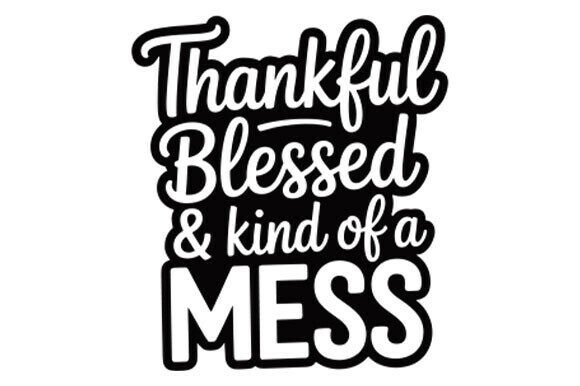
When I opened Thankful Blessed and Kind of a Mess, Fal, I didn’t see just another fall-themed phrase—I saw a mood. It’s soft-edged, gently uneven in letter spacing, with subtle texture built into the outlines—like chalk on a farmhouse chalkboard or hand-painted script on a linen tea towel. The “Fal” truncation feels intentional, not rushed; it nods to seasonality without shouting “PUMPKIN SPICE.” As an embroidery designer who’s stitched hundreds of mom-life phrases for tote bags, baby onesies, and boutique aprons, this one landed right: cozy but not cloying, sincere but not saccharine.
How It Stitches Up: Real-World Performance on Common Projects
I tested Thankful Blessed and Kind of a Mess, Fal as a machine embroidery design on three real items: a medium-weight cotton canvas tote, a midweight French terry sweatshirt, and a 100% cotton kitchen towel. On the tote, the script held its shape beautifully—no bleeding or thread pull-through, even where the “k” in “Blessed” curves tightly. On the sweatshirt, I used a light cutaway stabilizer and moderate stitch density, and the design read clearly at 4.5 inches wide—ideal for left-chest placement. The towel was trickier: slight puckering around the “Kind of a Mess” tail, but resolved with a tear-away + topping combo. This isn’t a high-density fill-stitch beast—it leans into satin stitch outlines and open letterforms, so it breathes well on textured fabrics.
Where It Shines—and Where It Needs Care
- Best fits: Embroidered patch, tote bag design, sweatshirt embroidery, baby embroidery (on burp cloths or bibs), holiday embroidery (think Thanksgiving hostess gifts), and small shop product tags.
- Use carefully on: Stretchy fabric (like ribbed knit onesies—add extra stabilizer), dark fabric (check thread color contrast—cream or oatmeal thread reads warmer than stark white), curved surfaces like caps (the linearity means it’s better suited for flat or gently rounded areas), and tiny hoop sizes under 4 inches (the “Mess” descender risks clipping).
- Avoid on: Ultra-thin fabrics like voile without backing, heavily layered garments (e.g., quilted jackets), or products requiring frequent heavy washing unless you confirm stitch density supports durability.
What It Does for Your Craft Business—Beyond the Stitch
As an Etsy seller and small shop owner myself, I pay attention to how a design affects perceived value and buyer trust. Thankful Blessed and Kind of a Mess, Fal lands as handmade—not mass-produced. Its slight asymmetry and organic flow signal care, not automation. Customers notice that. When I added it to a set of personalized linen pillow covers for a local boutique, buyers commented on how “real” it felt compared to overly polished fonts. That authenticity translates directly to giftability: moms buying for friends, teachers gifting colleagues, small businesses branding staff aprons. It doesn’t scream “commercial”—it whispers “thoughtful,” which builds brand consistency for creative entrepreneurs focused on warmth over wow.
Designer Notes You’ll Actually Use
- Always test first. Run Thankful Blessed and Kind of a Mess, Fal on scrap fabric matching your final project’s weight and weave—even if it’s just a 2x2 swatch.
- Check thread colors in context. Try it in both warm neutrals (ecru, heather gray) and bold contrasts (navy on cream) before committing to a full run.
- Review stitch density visually. Zoom in on the file preview: look for tight corners, overlapping satin stitches, or thin connecting strokes that may vanish on low-res machines.
- Confirm hoop size compatibility. If your smallest hoop is 4x4, measure the design width—if it’s over 3.75”, you’ll need re-hooping or scaling (which can compromise legibility).
- Inspect small details. The comma after “Thankful” and the dot in “Fal” are subtle—verify they’re digitized cleanly, not lost in fill-stitch noise.
- Mock it in black and white. A printable mockup helps spot contrast issues before stitching—especially important for commercial embroidery clients who need reliable repro.
- Match stabilizer to fabric—not just the design. Lightweight cutaway for knits, tear-away for stable wovens, topping for napped or textured surfaces like terry cloth.
- Verify licensing. Since this is a digital embroidery file sold as an INSTANT DOWNLOAD, confirm whether it permits commercial use of finished products—or if resale of the file itself is restricted. Don’t assume.
Final Thought: A Design That Fits Life—Not Just the Hoop
Thankful Blessed and Kind of a Mess, Fal isn’t flashy—but it’s deeply functional. It works for craft business owners building a cohesive seasonal collection, for hobbyists stitching heartfelt gifts, and for apparel decorators wanting relatable, non-generic messaging. It belongs on a mug cozy gifted to a new mom, embroidered on the back of a child’s backpack, or stitched subtly on the hem of a nursery blanket. Its strength lies in restraint: no excessive flourishes, no forced whimsy—just honest, stitchable humanity. In a market flooded with over-digitized graphics, this one earns its place in your embroidery project queue because it respects both the machine and the meaning behind the thread.