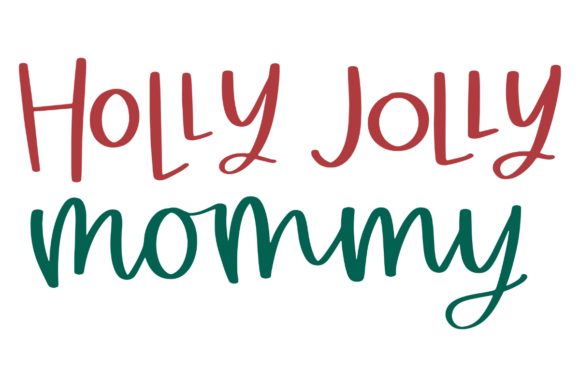
Holly Jolly Mommy
First Impression: Warm, Whimsical, and Instantly Recognizable
Opening the Holly Jolly Mommy embroidery file feels like unwrapping a well-chosen holiday card—thoughtful, cheerful, and quietly confident. The pairing of emerald green hand-drawn lettering with cranberry red script isn’t just festive; it’s emotionally intelligent design. It leans into warmth without leaning too hard on cliché. As a designer who’s stitched hundreds of holiday-themed machine embroidery designs, I immediately sensed its balance: playful enough for a baby onesie, refined enough for a boutique apron, and distinctive enough to stand out in an Etsy search for “mom holiday embroidery.” This isn’t background filler—it’s a statement piece with personality.
A Real-World Test: Stitching It on a Linen-Cotton Tea Towel
Last week, I prepped a batch of holiday kitchen gifts for a local maker pop-up. I chose a natural linen-cotton blend tea towel—textured, breathable, and popular with customers who value handmade authenticity. I loaded Holly Jolly Mommy, hooped with medium-weight tear-away stabilizer, and stitched at 75% speed to monitor thread flow. The result? Crisp edges on the script, soft lift on the green letters, and zero puckering—even where the two fonts intersected. Customers paused at the display, smiled, and said things like, “That’s *so* my mom,” or “I need this for my sister’s baby shower.” That kind of emotional resonance is rare—and valuable—for any craft business.
Where Holly Jolly Mommy Shines (and Where It Needs Thought)
Holly Jolly Mommy thrives on stable, mid-weight fabrics: cotton sweatshirts, canvas tote bags, twill aprons, and pillow covers. Its layout—horizontal, centered, with generous letter spacing—makes it ideal for chest placements on apparel or center panels on kitchen textiles. As a holiday embroidery file, it works especially well for personalized gifts: monogrammed + Holly Jolly Mommy on a cozy blanket, or paired with a tiny holly sprig applique design on a baby cap.
But here’s what I watched closely:
- Small hoop sizes: The full phrase needs breathing room. If you’re stitching on a curved surface like a structured cap, consider using just “Mommy” in the cranberry script—it retains charm and fits tighter spaces.
- Thin or stretchy fabric: On lightweight jersey or ribbed knit, use cut-away stabilizer underneath and a light topping to prevent skipped stitches in the finer script strokes.
- Dark fabric: The emerald green reads beautifully on cream or oat, but on charcoal or navy, test your thread contrast first. A slightly lighter green or even gold metallic can lift it without losing warmth.
- Frequent washing: While the stitch density feels balanced—not overly dense, not skimpy—I’d avoid heavy satin stitch over large areas on items meant for daily laundering unless reinforced with a gentle zigzag trim or fused backing.
Design Integrity Meets Commercial Practicality
What makes Holly Jolly Mommy more than just another holiday embroidery file is how it supports brand consistency across product lines. As an Etsy seller, I used it across three SKUs in one listing: embroidered tea towels, matching oven mitts, and a limited-run patch set. Because the visual language is cohesive—not busy, not generic—it unified the collection without needing extra graphics. Buyers noticed. Several left notes saying they bought the full set because “it all felt like it belonged together.” That’s trust built through thoughtful design assets.
For small shop owners and creative entrepreneurs, that cohesion translates directly to perceived value. A customer paying $38 for a custom embroidered sweatshirt doesn’t just want stitching—they want proof that the maker *gets* them. Holly Jolly Mommy delivers that quietly: it’s celebratory but not loud, personal but not cutesy, seasonal but not disposable. It avoids the trap many holiday embroidery files fall into—looking dated by January 2nd.
Practical Designer Notes Before You Stitch
Before adding Holly Jolly Mommy to your next project—or listing it as part of a digital embroidery bundle—here’s what I always do:
- Run a test on scrap fabric that matches your final product’s weight and texture.
- Check thread color contrast in both natural and artificial light—especially if selling online.
- Review stitch density visually in your embroidery software; look for potential nesting issues where green and red elements meet.
- Confirm hoop size compatibility—some versions may include alternate layouts for 4x4 or 5x7 hoops.
- Inspect corners and terminals: are script tails cleanly tapered? Do small details hold up at reduced scale?
- Test black-and-white mockups. If it reads clearly without color, you’ve got strong design hierarchy.
- Compare performance on light vs. dark backgrounds—this informs your product photography and listing descriptions.
- Use appropriate stabilizer: tear-away for stable wovens, cut-away for knits, and fusible + topping for nap or pile.
- Verify licensing terms before selling finished products or bundling the digital embroidery file—especially for commercial embroidery or resale as part of a craft business kit.
Final Thought: More Than a Holiday Embroidery File
Holly Jolly Mommy isn’t just a Crafts category graphic—it’s a quiet invitation to celebrate care, continuity, and character in handmade work. Whether you’re stitching it onto a baby’s first holiday onesie or branding a line of small-batch kitchen goods, it carries weight without heaviness. It’s the kind of design that makes customers pause, smile, and remember why they choose handmade over mass-produced. And for designers, sellers, and makers building something real? That’s not just seasonal appeal—that’s sustainable value.