Eat Sleep Rescue Repeat
A Designer’s First Impression: Warm, Clear, and Purposefully Balanced
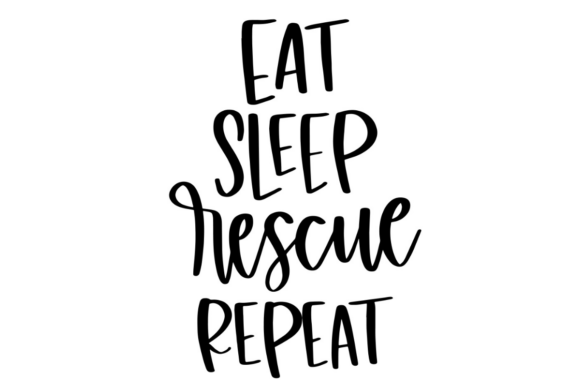
When I opened Eat Sleep Rescue Repeat for the first time, what struck me wasn’t just the theme—it was the thoughtful visual rhythm. The tall, clean block lettering grounds the phrase with quiet confidence, while the looping hand-lettered “Rescue” lifts it into something tender and personal. It doesn’t shout; it invites. As a designer who regularly selects embroidery files for client projects—custom tote bags for local shelters, baby onesies for rescue volunteers, or aprons for animal-loving bakers—I immediately saw how this design bridges sincerity and craftsmanship. It feels handmade without sacrificing legibility, playful without drifting into whimsy.
Where It Shines: Real Projects, Real Stitching
I tested Eat Sleep Rescue Repeat on a medium-weight cotton canvas tote bag—exactly the kind I’d produce for a small nonprofit fundraiser. The block letters held crisp edges under satin stitch, and the script “Rescue” flowed smoothly without thinning out or breaking in the loops. On sweatshirts? Equally strong—especially when paired with a light tear-away stabilizer and 40-weight thread. The design’s moderate height (no extreme vertical stretch) made hooping straightforward, and its open spacing prevented stitch crowding—a common pitfall with phrase-based machine embroidery designs.
It also translated beautifully to baby embroidery: stitched on a soft organic cotton receiving blanket, the contrast between structured lettering and gentle script felt reassuring—not cutesy, not clinical, just human. For Etsy sellers, that balance is gold. Customers searching for “rescue-themed gifts” or “animal lover apparel” respond to authenticity, and Eat Sleep Rescue Repeat delivers it visually before a single stitch is made.
Where to Pause—and Plan Ahead
This isn’t a one-size-fits-all embroidery file. Its charm lies in its intentionality, and that means knowing where to use it—and where to step back.
- Small hoop sizes (under 4”): The full phrase may feel cramped. Consider using just “Rescue Repeat” or “Eat Sleep Rescue” as a cropped variation for caps or wristbands.
- Stretchy or thin fabrics: The clean block letters rely on stable fabric tension. On lightweight knits or jersey, add cutaway stabilizer underneath and test stitch density—too many fill stitches can cause puckering.
- Dark or textured fabrics: The script portion benefits from high-contrast thread (e.g., white or cream on navy). On burlap or heavy linen, simplify backing—dense fill areas may sink into the weave unless stabilized properly.
- Curved surfaces (like structured caps): The horizontal layout works best on flat or gently curved panels. Avoid placing the full phrase across the front crown unless you’re confident in your cap-hooping technique and have confirmed stitch count isn’t excessive.
What It Adds to Your Finished Product—Beyond Aesthetics
Eat Sleep Rescue Repeat does more than decorate—it signals alignment. When stitched on a kitchen towel for a foster pet volunteer, it quietly says, “I see your work.” On a boutique apron for a pet bakery, it reinforces brand warmth without overt branding. That resonance elevates perceived value: customers pay more for items that feel considered, not generic.
From a craft business perspective, it supports consistency. Whether you’re listing it as a digital embroidery file on Etsy or stitching it onto physical products, the design reads cohesively across formats—ideal for printable mockups, social media previews, or in-person craft fair displays. It doesn’t compete with your voice; it extends it.
And because it avoids over-detail—no tiny serifs, no interlocking letters, no micro-spaces—it maintains clarity after repeated washing. That matters for personalized gifts like baby blankets or holiday stockings meant to last.
Practical Notes Every Embroidery Designer Should Run Through
Before cutting fabric or uploading to your machine:
- Test Eat Sleep Rescue Repeat on scrap fabric matching your final project’s weight and stretch.
- Check thread color contrast—especially for the script portion—on both light and dark backgrounds.
- Review stitch density in the block letters vs. the script; adjust if needed for your fabric type.
- Confirm hoop size compatibility—some versions may require a 5×7 or larger, depending on scaling.
- Inspect small details at actual stitch size: does the loop in “Rescue” hold shape? Do corners stay sharp?
- Try a black-and-white mockup—this design relies on form and flow, not color, so grayscale previews reveal clarity issues fast.
- Verify stabilizer choice: tear-away for stable wovens, cutaway for knits or delicate items.
- If selling finished products or the digital embroidery file itself, confirm licensing terms—especially for commercial embroidery or resale as a Graphics asset.
Final Thought: Not Just Another Phrase—A Quiet Anchor
In a sea of crafty slogans, Eat Sleep Rescue Repeat stands out by refusing to overpromise. It doesn’t try to be clever, ironic, or overly decorative. Instead, it offers rhythm, respect, and quiet recognition—for the work rescuers do, and for the makers who want to honor it meaningfully. Whether you’re an Etsy seller building a niche shop, a small-batch apparel decorator, or a hobbyist stitching heartfelt gifts, this design earns its place not through flash, but through fidelity—to theme, to texture, and to the people who’ll wear, hold, or gift it.
That’s why I keep Eat Sleep Rescue Repeat in my go-to folder for Crafts projects that need heart *and* precision. It’s not just stitched—it’s trusted.