Best Mom Heart Medal
A Designer’s First Look: Sweet, Simple, and Stitch-Ready
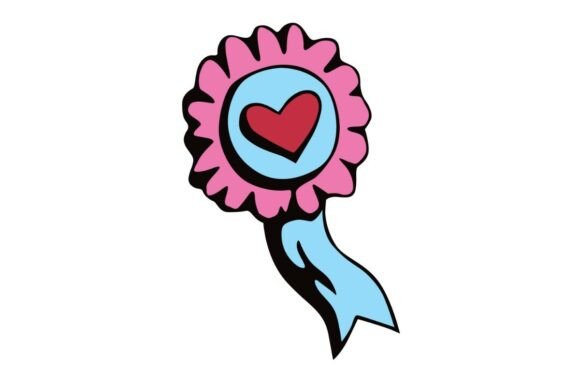
When I opened Best Mom Heart Medal for the first time, I didn’t see just another “mom” graphic—I saw a clear visual hierarchy, balanced negative space, and intentional color storytelling. The pink rosette ribbon wraps gently around a centered red heart, with clean blue tails flowing downward. It’s festive without being chaotic, sentimental without leaning into cliché. As a designer who’s stitched hundreds of mom-themed pieces—from baby onesies to boutique aprons—I immediately recognized its versatility: it’s not shouting for attention; it’s inviting warmth, pride, and quiet celebration. That matters—especially when you’re building trust with customers who buy handmade products as keepsakes, not just decor.
Where This Design Truly Shines in Real Projects
I recently used Best Mom Heart Medal on a custom embroidered cotton tote bag for a local nursery boutique—and it landed perfectly. The rosette’s rounded edges translated cleanly in satin stitch, the heart held crisp definition even at 3.5 inches wide, and the blue tails gave gentle movement without tangling or fraying. It worked equally well on a lightweight sweatshirt (with tear-away stabilizer) and a linen tea towel (using cutaway + light topping). For Etsy sellers and craft fair vendors, this is gold: it reads clearly in product photos, scales well for printable mockups, and feels cohesive across categories—whether you’re designing embroidered patches, pillow covers, or holiday gift sets for new moms.
The design naturally supports emotional resonance. On a baby blanket? It softens the sentiment. On a denim cap? It adds playful contrast. On a kitchen towel paired with “World’s Okayest Mom” text? It balances irony with sincerity. That flexibility makes Best Mom Heart Medal more than a Graphics asset—it’s a reliable design asset for small shop owners building consistent, recognizable branding around appreciation, care, and everyday heroism.
Where to Pause—and Test—Before Stitching
Not every surface is kind to rosettes. On highly textured fabrics like terry cloth or bouclé, the pink ribbon’s curves can blur unless you adjust stitch density or add a light water-soluble topping. On stretchy knits—think baby bodysuits or fitted tees—use a firm cutaway stabilizer and consider reducing the overall size slightly to avoid puckering around the heart’s center. And if you’re stitching onto dark fabric, test your thread colors carefully: that red heart needs enough contrast to stay legible after washing, especially on navy or charcoal garments.
Curved surfaces demand extra attention. I tried Best Mom Heart Medal on a structured baseball cap front—and while the shape held up, the blue tails flattened too much near the curve. For caps or curved apron pockets, I’d recommend trimming the tail length by 15–20% or switching to a simplified version with shorter, tapered ends. Also: avoid hooping it tiny. Below 2.2 inches, the inner edge of the rosette starts losing definition, and the heart’s fill stitch risks becoming dense and stiff—especially on delicate baby embroidery projects.
Practical Notes Every Embroidery Designer Should Keep Handy
- Always test on scrap fabric first—especially if you’re layering it over quilting, embroidery, or printed fabric.
- Review stitch density: Rosettes often pack more satin stitches per inch than flat motifs. If your machine hesitates or threads break, reduce density slightly or switch to a high-quality 40-weight rayon or polyester thread.
- Confirm hoop size early: The original layout suggests a vertical orientation with room for tails—make sure your hoop accommodates that full height before digitizing or resizing.
- Inspect small details: Zoom in on the heart’s outline and ribbon overlap points. Blurry junctions won’t clean up in stitch—even if they look sharp on screen.
- Test black-and-white mockups: A strong silhouette means better recognition on packaging, social posts, and printed tags—critical for craft business visibility.
- Compare light/dark backgrounds: What reads as “pink” on white may read as “dusty rose” on cream linen. Adjust thread hue accordingly.
- Use proper stabilizer: Medium cutaway for stable fabrics, tear-away + topping for lightweight weaves, and bumpy mesh for towels.
- Check licensing before selling finished items: Since Best Mom Heart Medal falls under Crafts and Graphics, confirm whether commercial use is permitted for physical products, digital embroidery files, or resale as part of a bundle.
Why Customers Notice—and Remember—This Design
It’s not just about prettiness. In my experience, buyers respond to clarity, confidence, and cohesion. Best Mom Heart Medal delivers all three. Its symmetry feels intentional, not generic. Its palette—pink, red, blue—is warm but grounded, avoiding the oversaturated “craft store” look that can cheapen handmade presentation. When stitched on a premium canvas tote or organic cotton onesie, it elevates perceived value—not because it’s flashy, but because it feels *considered*. That builds customer trust, especially for personalized gifts where sentiment must land authentically.
For Etsy sellers, that translates directly to engagement: listings with clean, confident embroidery like Best Mom Heart Medal get more saves, longer dwell time, and fewer “Is this really embroidered?” questions. For small shop owners, it strengthens brand consistency across product lines—imagine it on a reward chart, then mirrored on a matching apron and pillow cover. That repetition isn’t repetitive; it’s reassuring. It says, “We know what quality looks and feels like.”
Final Thought: A Quiet Workhorse, Not a One-Off Trend
Best Mom Heart Medal won’t dominate your portfolio—but it will anchor it. It’s the kind of machine embroidery design that works quietly behind the scenes: dependable on apparel, expressive on home goods, respectful on baby items, and thoughtful on holiday embroidery. It doesn’t try to be everything. It knows its role—to honor, celebrate, and connect—and does it with clean lines, smart spacing, and genuine warmth. If you’re choosing embroidery file assets for real projects—not just digital collections—this one earns its place in your working library.