Bark the Herald Angels Sing
A Designer’s First Glance: Festive, Friendly, and Unmistakably Dog-Loving
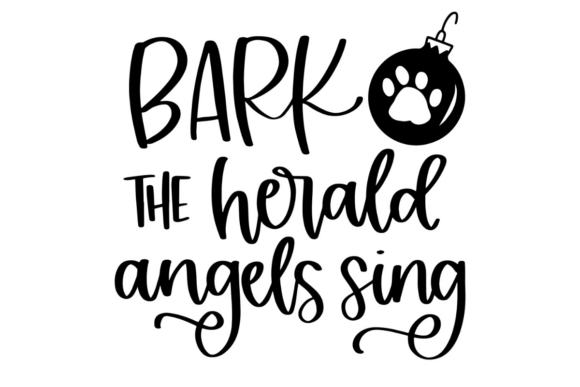
When I opened Bark the Herald Angels Sing for the first time, I smiled—not just because it’s clever, but because it lands with warmth and intention. This isn’t a generic holiday graphic slapped onto a paw print. It’s hand-lettered with rhythm: soft curves in the “B”, a gentle lift in the “g” of “Sing”, and that playful paw-print ornament sitting like a punctuation mark—neither too big nor too small, just right beside the phrase. The mood is joyful but not chaotic, nostalgic but not dated. As a designer who’s stitched hundreds of holiday pieces for Etsy sellers and boutique clients, I immediately saw where this fits: on a cozy oatmeal-colored tote bag for a local dog rescue’s holiday market, or embroidered subtly on the chest of a baby onesie as a quiet nod to pet-loving parents.
Where It Shines—and Where It Needs Thoughtful Placement
Bark the Herald Angels Sing excels in medium-to-large embroidery projects where legibility and charm can breathe. On a cotton sweatshirt? Excellent—especially with a light stabilizer and balanced thread contrast (think charcoal gray thread on cream fleece). On a linen tea towel? Equally strong: the hand-lettered flow reads clearly even at 3.5" wide, and the paw adds tactile personality without overwhelming the fabric’s natural texture. As an embroidered patch? Yes—but only if you’re using a clean satin-stitch outline around the letters and a well-defined fill stitch in the paw. It’s not an appliqué design, so don’t expect raw-edged fabric layers; it’s a digital embroidery file built for precision stitching, not fabric layering.
That said, I’d pause before placing it on certain surfaces. On a curved cap front? Possible—but only if your hoop size comfortably accommodates the full width (ideally 4" or more) and you use a tear-away + cutaway hybrid stabilizer to prevent puckering. On thin baby knit? Proceed with caution: test stitch density first. The letterforms are open enough to avoid excessive fill, but the paw’s interior detail could compress on stretchy fabrics if stabilizer is under-applied. And on dark fabric? Absolutely workable—but run a black-and-white mockup first. Some lighter thread colors may fade visually against navy or charcoal unless you boost contrast with a slightly deeper tone or add a subtle white underlay.
Real-World Impact: More Than Just Cute
I recently used Bark the Herald Angels Sing on a set of custom pillow covers for a client launching a small shop focused on pet-friendly home goods. The reaction? Consistently warm. Customers didn’t just say “adorable”—they paused, read it aloud, and laughed. That moment of recognition—of shared humor and seasonal spirit—is what turns a handmade product into a memorable personalized gift. It also reinforced brand consistency: every item felt cohesive, festive, and authentically *them*. For Etsy sellers, that emotional resonance translates directly to better listings, stronger buyer engagement, and repeat customers asking for matching items (yes, I’ve already sketched a coordinating “Good Boy Noel” version).
Visually, the design holds up across formats. In printable mockups for social media or shop banners, it scales cleanly. As a digital embroidery file, it communicates professionalism—not because it’s flashy, but because its spacing, kerning, and ornament placement show intentionality. That builds trust. When buyers see thoughtful execution like this, they assume care went into the finished product too—stitch quality, fabric choice, packaging. That perception elevates perceived value, especially for small shop products priced above mass-market alternatives.
Practical Notes Every Embroiderer Should Check Before Stitching
- Test first—always—on scrap fabric matching your final project’s weight and stretch. Even with ideal settings, thread tension shifts between machines.
- Review stitch density in your embroidery software. If the paw feels overly dense or the letters look thin and fragile, adjust fill angles or reduce density by 5–8% for breathability.
- Confirm hoop size. This design works best in a 4"x4" hoop or larger. Avoid cramming it into a 3"x3" unless you’re willing to scale down and risk losing the paw’s clarity.
- Inspect small details: the tail of the “g”, the curve of the “S”, and the negative space inside the paw. These define its character—if they vanish in stitching, the design loses its voice.
- Use proper stabilizer. Medium-weight cutaway for knits, tear-away for stable wovens like cotton duck or linen. Skip the lightweight mesh—it won’t support the letterforms evenly.
- Check licensing. Since this is a digital embroidery file intended for Crafts and Graphics use, confirm whether commercial embroidery rights are included before selling finished items or bundling it into design assets for other makers.
Final Thought: A Design That Works as Hard as You Do
Bark the Herald Angels Sing doesn’t shout. It winks. It invites. It fits seamlessly into holiday embroidery projects that balance craftsmanship with heart—whether you’re stitching one-of-a-kind baby embroidery for a newborn photo session, building a line of custom apparel for your craft business, or prepping a batch of embroidered patches for a dog-themed pop-up shop. It’s versatile without being vague, playful without sacrificing polish. As a machine embroidery design, it rewards attention to detail—and returns that care tenfold in customer delight. Just remember: let it breathe, test it honestly, and pair it with materials that honor its warmth. Then watch it become more than a design—it becomes part of someone’s favorite holiday memory.